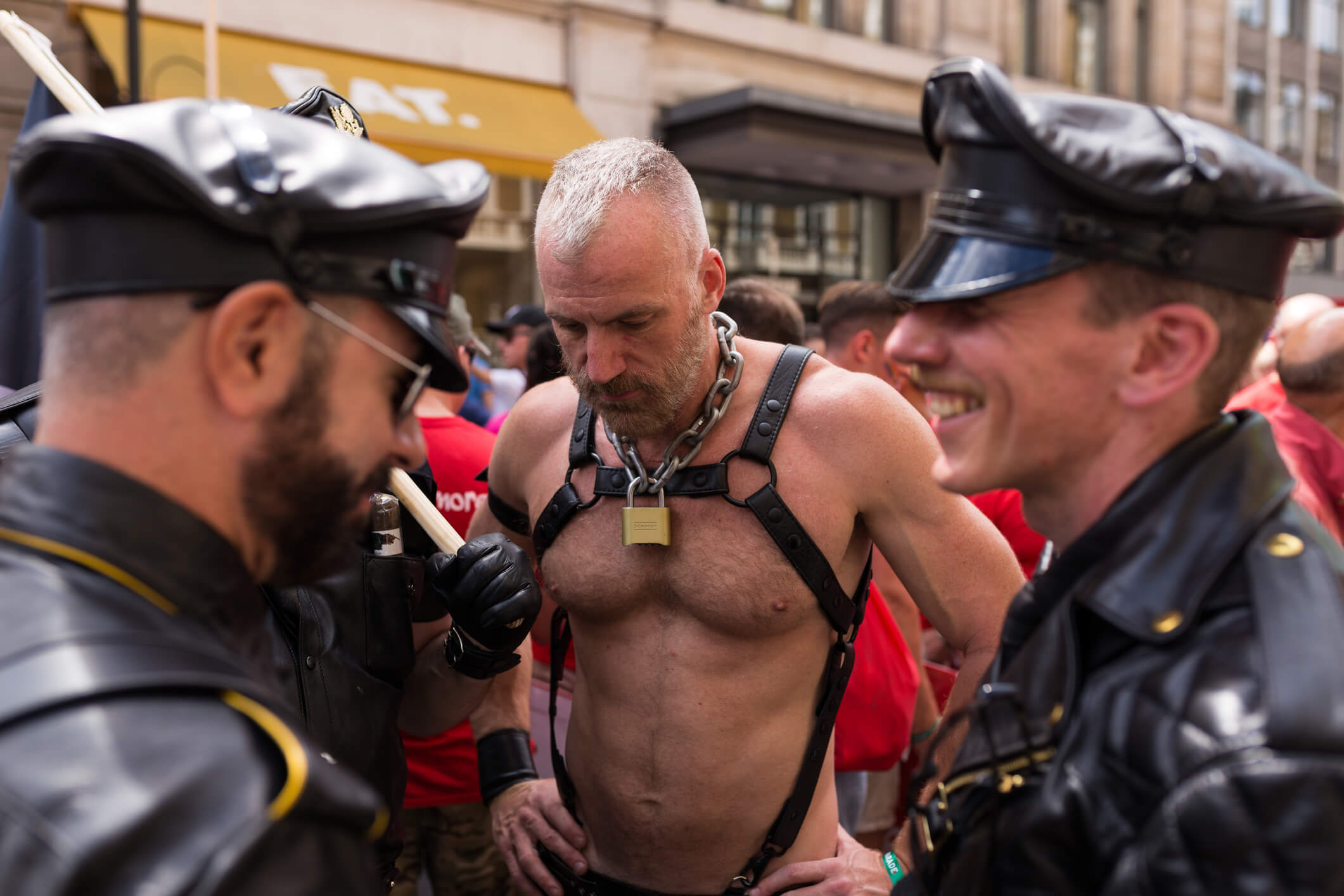

Why might someone choose to spend every day eating from a dog bowl? Why might someone choose to serve another person — cleaning, cooking, managing a household — when they don’t have to? Why does someone allow themselves to be moulded?
Why does a Master choose to hold responsibility for another person’s life, with all the weight that comes with it? Why does someone choose to deal with the hardships and challenges of life events, not just for themselves but for those under their protection?
How do both Master and slave decide to keep going when faced with the real pressures of work, health, family, and the grinding ordinariness of daily life?
These aren’t rhetorical questions. They’re the questions that separate a Master/slave relationship that lasts from one that doesn’t.
Authenticity is the final pillar of the STERA method— the A at the end. And it may be the hardest to work with, because it asks you to stop describing what your relationship does and start understanding why you chose this way of living in the first place.
If structure is the manifestation of a power exchange relationship, then purpose is the soul.
“Purpose is the soul of the Master/slave relationship. Structure is its manifestation.”
Why purpose sustains a long-term M/s relationship
Many of us come to the Master/slave lifestyle through desire. Something about it reaches you — the structure, the protocol, the surrender or the control. For some, it starts as a turn-on. For others, it’s a pull toward something they can’t quite name – a calling of the soul.
That’s a completely valid beginning. But it’s rarely enough to sustain a relationship across years or even decades.
The first months of any intense power exchange tend to run on early energy. The novelty of the protocol. The power of obedience. The newness of holding or surrendering control. But that energy isn’t infinite. It depletes. Life arrives — work, illness, family, change. And then the question becomes: what’s left when the initial charge has settled into routine?
The answer, in every long-term Master/slave relationship I’ve coached and interviewed, is purpose. Not rules. Not intensity. Not fantasy. The quiet, settled understanding of why you’re both doing this — and what it means singularly to you.
That why is what pulls you both back to the relationship when things get hard. It’s what helps you navigate the moments when keeping the dynamic going feels like effort rather than relief. It’s what differentiates a real M/s relationship from a prolonged scene.
What purpose is NOT
When I ask Masters and slaves to describe their purpose, they almost always describe structure.
“We’ll have daily protocols. The slave will use a dog bowl. There will be service every morning. The slave will call me ‘Sir.'”
These are real things. Important things. But they’re not purpose — they’re structure.
Structure is the how of your relationship. The visible rituals, rules, and roles that make the power exchange real in daily life. It’s the S in STERA — the first pillar, and a crucial one. But structure without purpose is a beautiful container with nothing inside. You can follow every rule and still not know why you chose this life.
Purpose is the why. It’s the reason you’re doing this at all — not what you do, but what it means.
Once you understand the difference, the relationship between the two becomes clear: purpose shapes structure. When you know why you’re living this way, you can build rituals and rules that actually serve that why — rather than borrowing someone else’s blueprint and hoping it fits.

The SELS framework: What makes a good purpose for your Master/slave relationship
Most people’s first attempt at purpose is vague. “I want to serve a Master.” “I want to have a slave.” These statements aren’t wrong — but they’re not specific enough to do anything useful.
Over years of working with Masters and slaves in coaching, I’ve developed a framework for sharpening purpose into something you can actually use. I call it SELS:
- S — Specific
- E — Excludes
- L — Larger Purpose
- S — Shit on it
S — Specific
A good purpose is specific enough to mean something.
Compare these two statements:
- Vague: “I want to serve a Master.”
- Specific: “I support my Master by anticipating everything he needs. In return, he takes control of everything else in my life — so my focus narrows entirely to him. I stop carrying the weight of self-determination. That is what I am looking for.”
The second statement is actually about something. It tells you what the slave finds meaningful, what they need from a Master, and what it will feel like when the relationship is working.
For a Master:
- Vague: “I want a slave to control.”
- Specific: “I want to transform someone — to take who they are and, through service, protocol, and my presence, help them access parts of themselves that ordinary life keeps closed. The household functions as a result of that. But the transformation is the point.”
The specific version already tells you what kind of relationship this Master is building — and who wouldn’t fit into it.
Getting specific requires honesty about what actually moves you. Not what you think you should want. Not what looks right on a profile. What actually matters.
E — Excludes
A purpose that applies to everyone isn’t really a purpose.
A good purpose is specific enough to naturally exclude some people. If your purpose as a Master includes transformation, dehumanisation, and genuine connection, that will naturally exclude slaves who want a purely service-based dynamic, or those who aren’t looking for identity-level change. And that’s the point.
Knowing your purpose helps you identify alignment faster. It also helps you understand that a mismatch isn’t about anyone being wrong or lacking. It’s about purpose. Two people can be remarkably Master and slave individually, yet together completely misaligned in what they need.
If your purpose is so broad that it allows everyone, this is probably not specific enough for you and your needs.
One important note: don’t exclude too much. I’ve coached people whose purpose had become so exhaustively specific that almost no one could have met it — and they were increasingly frustrated and bitter about it. There’s a real difference between a purpose that discerns those who suit you best and one that’s designed around an imaginary person you will probably never find.
A good purpose excludes the wrong people. It doesn’t make the right people impossible to exist.
L — Larger Purpose
The third dimension is harder to articulate — and more rewarding when you get there.
Larger Purpose asks: what does this relationship make possible that nothing else could? What is it for, beyond the dynamic itself?
For some people, this is about becoming themselves — moving from an ego identity defined by society to one that’s actually based on their soul.
The M/s relationship becomes a container for self-discovery that ordinary life doesn’t allow. A slave might articulate their larger purpose as: Through complete surrender, I access parts of myself I’ve never been able to reach — the animal, the object, the focused presence that doesn’t think, only serves. This relationship is a means of becoming more fully myself.
“Once you like break the door open, a lot of energy is going to start flowing. We are changed because of those experiences. I’m here to be changed.”
And it can be a paradox by giving up a sense of identity that’s defined by your ego in society. You actually discover and live a deeper identity, becoming more yourself. It can be hard to put what I’ve said into words, but often it’s something that both masters and slaves can recognise.
For a Master, it might sound like: What I’m building with my slave isn’t just a household. It’s a world I’m responsible for. I become more present, more fully myself when I’m genuinely responsible for someone else’s growth. That’s what this relationship is for.
As I have moved into a Master role and I have a slave stay for a weekend or week, what has surprised me is how much more present I become. How much more I settled into my skin, becoming more mindful and intentional, not just for the slave but for the household and myself — an ease of being, as it were.
This doesn’t need to sound grand. It doesn’t need to mean anything to anyone else. But when you can articulate what the relationship is for at this level, the purpose has real weight — and it becomes the thing you come back to when everything else gets hard.

S — Shit on it
For a master-slave relationship that lasts for years and decades, any purpose must be one that helps pull both Master and slave back into the relationship despite the challenges of life.
In mainstream relationships, a core line in marriage is “in sickness and in health.” The core tenet being that these two people will stay together through thick and thin.
When either master or slave is looking for a relationship that will last for a lifetime, there will be sickness, there will be issues, there will be challenges. A good purpose is one that both master and slave can use to navigate these challenges and serve as a lighthouse to bring them back to where they both want to be.
And so with whatever purpose you create, throw shit at it. Throw the challenges that any life can have – Is the purpose you’ve created one that can survive these challenges? If not, how might you change or adapt your purpose?
This links to resilience, which is the R in STERA.
It’s very easy to imagine the fun part of power exchange, in my case, thinking of the transformation, the fire and the energy, but what happens when ill health occurs? Recently, I have moved countries. I have had a family member become permanently paralysed, and I was diagnosed with cancer.
My slave has stuck with me throughout all of that because we share a purpose, which includes love, empathy, and connection. To help each other out during these challenging spots, rather than leaving.
Thinking about these challenges can be scary, especially if you’re on the younger side. We often want to believe we can live forever without any challenges or issues. I remember when I was 18 years old and thinking about being a slave. My big worry was what would happen if I or someone else was ill, and then just repressing it, and I tried not to think about it.
Whereas in truth, actually finding a master who had a purpose that included this and could articulate it in a way that gave me confidence would have helped me move into my slave role much more quickly than I actually did.
It is only with the passage of time that we start to see that entropy and challenges can come for us all when we least expect it. To create a purpose and relationship, even a power exchange one, that can weather these challenges — that is worth working for.
Here are some questions to help you stress-test yours:
- If one of you became seriously ill for an extended period and the dynamic had to pause, what would keep you both in the relationship?
- If the physical or sexual elements disappeared for six months, what would remain?
- If you both changed significantly over the next five years — as people inevitably do — does your purpose have room for that?
- Is there anything in your purpose that only works when you’re both at your best?
- If the relationship went through a serious breach of trust, would your purpose give you something to return to?
- What would have to happen for you to walk away? Does your purpose honestly account for that?

How to find your purpose
Finding your purpose is hard. And so if you’re reading this with no idea how to make this happen, don’t worry. I have a number of techniques that you can use below.
1. Through lived experience
I found my own purpose as a slave through lived experience rather than abstract thought.
When I visited Masters who focused solely on domestic service, I felt something was missing. When I was in containers that included protocol and dehumanisation — where transformation was genuinely expected — something landed. It touched something in me that service alone hadn’t. That contrast told me: service is not my only purpose. Transformation is a key part of it.
“Doors are opening all the time, all around all of us. Part of it is: do I recognise a door opening? And am I willing to go through it?”
Purpose is something that is shaped and formed over time. By having experiences and then reflecting through journaling and noting what calls to you and what does not, and even what confuses you, allows you, over time, to start understanding the purpose and soul of what it is you are looking for.
This is also true for people already in a long-term power exchange relationship. As you live the lifestyle more, the purpose can become clearer and more apparent. Much like painting a watercolour, it can start abstract and blurred, and then as you do more and live more, you can fill in the details.
And over time, as you discover more about yourself, your understanding of your purpose can change.
If you want to use journaling to support this process, here are some questions worth sitting with. Don’t rush them — write the honest answer, not the polished one:
- Describe a moment in a dynamic — real or imagined — when something clicked. What was happening? What made it feel right?
- Think of an experience that felt hollow or wrong, even when it looked right on paper. What was missing?
2. The 5 Whys
Take your current best description of what you want — however vague — and keep asking why until something honest surfaces.
Example:
- “I want to serve a Master.”
- Why? “Because I want to feel owned.”
- Why does being owned matter? “Because it takes the weight off me — I stop having to make every decision.”
- Why does that matter? “Because I feel more free when I’m not fully responsible for myself.”
- Why does that feel important? “Because my ordinary life asks so much of me all the time. This is the only place I’ve ever felt genuine relief.”
That fifth answer is different from the first. It’s actually about something. A purpose built around I come to this relationship to find relief from society’s demands will lead to very different conversations — and very different structure — than “I want to serve a Master.”
Keep asking why until you hit something that feels lived-in and honest rather than theoretical.
And remember, if you’re struggling, go back to the actual experiences you’ve had and what you enjoyed, what you did not, and what resonated most with you.
Ruling with Purpose: The King Within the Master
3. Reverse engineer from outcome
Instead of starting with what you want to do, start with what you want to have experienced — in a year, in five years, in a decade.
What would be different? What would you know about yourself that you don’t know now? How would you feel in your relationship compared to how you feel today? What would you have built together?
Work backwards from that picture. The purpose is often hidden in the gap between where you are and where you’re trying to get.
5. Define your terms
We assume we all mean the same things when we use words like control, service, objectification, and ownership. We often don’t.
Ask yourself what you actually mean when you use the terms that feel most central to your purpose. What does control mean to you in practice — financial, physical, social, temporal, all of these? What does service look like in your ideal dynamic — domestic, sexual, emotional? What does transformation mean to you specifically? And then go even deeper with any definitions you can ask again what that means.
Drilling into what you actually mean often reveals distinctions that matter enormously to how the relationship would need to be structured.
What it looks like when purpose is missing
As a slave, I would regularly have Masters reach out — often because of the podcast or the website. When I asked them what they wanted, they would ask me what I wanted. When I told them, they would say, “Yes, that sounds good. I think I want that too.”
That never sat right with me. And now I understand why.
A Master with no formed purpose doesn’t know how he wants to shape you, move you, or move the relationship forward. He likes the idea of having a slave — perhaps the sex, the status, the service, the intensity — but he hasn’t yet asked himself why. He’s attached to the concept, not to a purpose.
A relationship built on that foundation will always struggle. The slave ends up carrying the purpose for both people. The dynamic becomes one person leading and one person agreeing — not a genuine power exchange.
Absence of purpose isn’t a permanent state. But it’s worth naming clearly if that’s where you are — and it’s worth doing the work before you try to build something with someone else.
Purpose as north star for STERA
Purpose is the A in STERA — but it functions as the foundation of the whole framework. For many people, we can enter the framework more easily with structure. Once the structure is settling in and we are activating the other pillars, we can then understand our purpose. It circles back to structure, and the framework starts again.
- Structure built without purpose borrows from someone else’s blueprint. When you know your why, you can build rituals and rules that actually serve it — rather than performing someone else’s version of M/s.
- Trust deepens when both people understand what the relationship is for. The consistency that builds trust over time is much easier to sustain when it’s rooted in shared purpose rather than habit or obligation.
- Evolve becomes navigable when you have a north star. When the relationship needs to change — and it will — purpose tells you which changes take you closer to what matters and which take you further away. When I think about whether something needs to change in a relationship, the first question is always: does this serve the purpose?
- Resilience in difficult times comes from returning to why. When life puts pressure on a dynamic — and it will — purpose is the lighthouse. It keeps you oriented when everything else is in motion.
- Authenticity — this pillar — is what connects all of them. Because without knowing your own why, all the structure, trust, evolution, and resilience in the world will be aimed in slightly the wrong direction.
The Authenticity Toolkit has 9 tools for finding the purpose that sustains your relationship — including the Purpose Statement Builder, the 5 Whys Extended, and the six Purpose Archetypes.
And remember, your relationship doesn’t have to look like anyone else’s. It has to be yours.