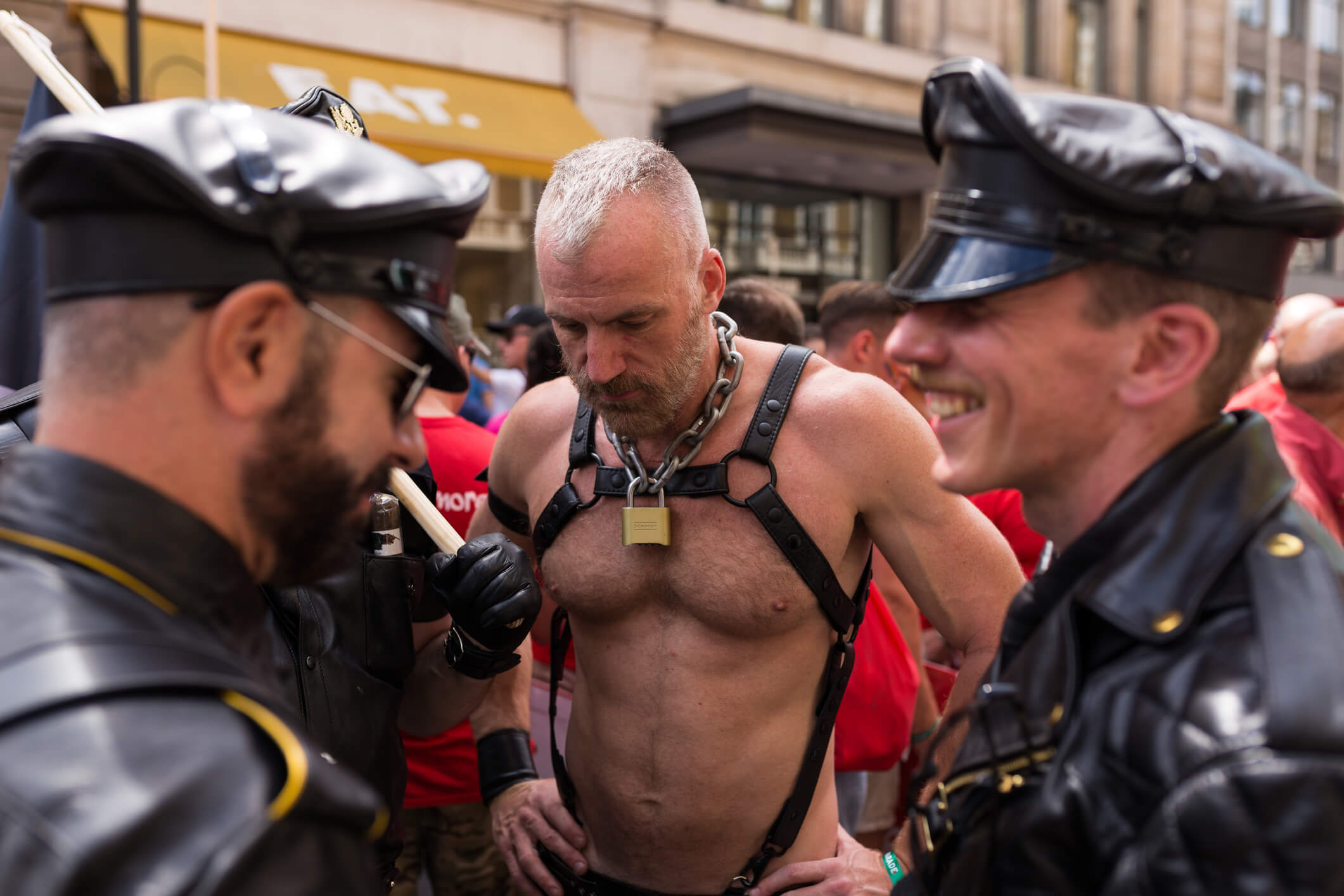

“We’ve had to change a lot, but the foundation stays the same.”
Master/slave relationships that last never stay the way they were originally built.
Not because they fail, but because the relationship is a living, breathing thing that changes.
The structure you put in place in the first months or year will shift. Protocols that once felt like the whole relationship will become the background. Other protocols lose their meaning, as Master and slave outgrow them. Things you never thought would matter will become central. Things you planned for carefully will quietly fall away. There will be a normalising of things you never thought could be normalised. And you will find depths you never realised were there.
Evolve is the third pillar of the STERA method — and it’s the only pillar about the relationship’s direction over time. Structure builds the container. Trust fills it. Evolve asks: Where is this going? Where is the Master/slave or BDSM relationship now, and are you tending to it deliberately?
The bonsai tree of Master/slave relationships
Think of a long-term M/s relationship as a bonsai tree.
You plant it with intention. Over time, you shape it — the direction of the main branches, the overall form, the balance. You prune it regularly so that what grows is what serves the intention and design. And you give it the right conditions: light, water, care.
Just like a power exchange relationship.
But just like a bonsai, you cannot control where it grows. You can shape the growth. You can encourage this branch and discourage another one. But the tree has its own direction, its own pace, its own surprises. New growth appears where you didn’t expect it. A branch you thought was essential falls away. The tree becomes something that reflects your tending — but it is never entirely what you planned.
Both Master and slave are gardeners. The Master shapes the form and holds the direction. The slave tends alongside — noticing things, observing the tree, contributing to its health. A Master who gardens alone — who doesn’t want the slave’s observations about how the relationship is doing — is limiting the perspective of what they see. They can only see one angle. The tree knows more than either of them. It is holistic. And as a result, both sets of eyes and both perspectives matter.
A bonsai that stops growing is dying. A Master/slave relationship that stops evolving is too. It may look intact on the surface. The protocols and structure can all be in place, but it becomes fixed and brittle.

How Master/slave Relationships Evolve: Three Modes
In the relationships I’ve coached, in those I have interviewed for the podcast, and in my own experience, evolution in an M/s dynamic takes three distinct forms.
Deepening
This is the most common in healthy, long-term power exchange — and often the hardest to see while it’s happening. The same dynamic goes further. Protocols that once felt like a conscious effort become instinctive. What was an agreement becomes a need. A ritual that started as a structure becomes the clearest expression of who you both are in this relationship. It has meaning to both Master and slave, and is deeply missed when absent.
We often only find out this has happened after it has happened. With my slave, having him right to the side of my chair while I fondle his balls or rest my arm on his back is now a deep ritual for us. I think when we started, although I hoped for that, it’s only now we realise how deep that simple action is.
Deepening can also include fetishes. I’ve seen this with a Master I interviewed — Master Jim — whose relationship with his slave included boot worship from early on. Over time, that evolved into foot worship, becoming central to their entire dynamic. It wasn’t a change of direction. It was an intensification. The original thing went deeper, became richer, and became more essential to how both people experienced the power exchange. Neither of them planned it. It emerged from years of tending.
“A relationship that’s going to go on for years, there’s got to be a sense of growth on all levels — aspiration, domination going deeper where you want to go deep, fetishes, discovering new connections.”
For others, they might not be interested in fetishes at all — for example, they want a more Roman service-driven style of slavery. But over time, they began experimenting in some of the areas they had originally discounted. Such as slave sean.
And in the case of Master Tyger and his slave, they deepened and evolved into a total power exchange relationship, even though that was not part of the original plan.

Adaptation
Life happens — a health crisis, a move, a career change, a family emergency, even moving in together, or a new family member in a polyamorous situation — something external changes the conditions the relationship is living in. The specific rituals may need to change.
The protocols may need to be simplified or restructured. What matters is that the rituals serve what they served, even if the expression looks different.
This is what Leather Phoenix meant by “we’ve had to change a lot, but the foundation stays the same.” In a relationship that’s been going for sixteen years, you’ve had to adapt to the events life throws your way. Lasting Master/slave relationships adapt around the core rather than losing it.
Transformation
A person in the relationship genuinely changes — not just an external circumstance, but who they are. The relationship has to accommodate who they’ve become, which is sometimes a different thing from who they were when they began.
Often, when we start to live in a way that brings the power exchange or our role as Master or slave to life, we go through a transformation. This transformation is alchemical.
The very nature of ourselves changes through living more honestly and by allowing ourselves to deeply engage in power exchange.
This can manifest in many different ways, from changing careers to changes in needs and wants to healing trauma to a cathartic closure of what’s happened before to a new beginning that shifts a lot of who we are. Often, it’s moving us closer to who we always were, but we were never able to access that.
But as these changes occur, both the person in question and the people in the relationship need to keep track of them and respond to them.
It can also impact our role in the Master/slave relationship.
For example, I know a slave who has experienced an incredibly deep transformation with no love and empathy from the Master. When the Master ended the relationship, the slave needed to heal. The slave realised they still wanted to be a (total power exchange) TPE slave, but the needs and what they were looking for changed significantly based on that first experience. He now wanted someone who would also love and care for him and have empathy, someone who he could love and care for in return.
From exploring only deep control and transformation so totally to the exclusion of all else, this slave has now found that need has been tempered and transformed into something more holistic, filling all his needs.
I know other slaves who wanted to explore a more dominant side after they fully explored their submission. Whereas others want to go deeper into that submission or Mastery.

Stages of a Long-term Power Exchange Relationship
These three modes don’t happen in isolation — most long-term Master/slave relationships move through recognisable phases, and each phase tends to bring a different kind of change. Knowing which one you’re in helps you tend the right things.
- The building phase. The early work: establishing structure, finding what fits, building the first loops of trust. Everything feels new.
- The consolidation phase. The structure is working, and things are running — which is often when complacency, disguised as stability, sets in. If the Master stops actively holding the structure, the slave stops trying to maintain it. The Master/slave relationship can quietly atrophy into something mainstream and vanilla.
- The deepening phase. What was effortful becomes instinctive. Protocols go further, carry more meaning, and are missed when they’re absent. This is when the modes above — especially deepening and transformation — tend to emerge.
- The adaptation phase. Forced by something external, or by recognising that who you’ve both become doesn’t quite fit the relationship you built. Simplify, restructure, or renegotiate. The purpose is the lighthouse here: what are you adapting toward?
- The renewal phase. Usually, after something hard, not going back to what you were, but consciously choosing what you want the relationship to be from here. Often the richest phase, because it’s the most deliberate.
There are also times when the relationship will move and change more quickly. This is often at the start or after consent has been given for a deeper form of control, or some sort of event, such as moving in together, or if the slave retires and no longer needs to work. These are all points of change where the Master/slave relationship will evolve and change much more quickly.
Evolving is scary
It can feel scary knowing that a power exchange relationship needs to evolve and change. For many of us, we find great comfort in the fixed nature of the structure and protocol, especially for those of us who have a need for certainty. When you are looking for a M/s relationship or have just started, the thought that it will change can feel disconcerting.
But when we talk about a long-term Master/slave relationship changing, we mean it changes over a long period of time. Not week by week, not even month by month — but by year by year and decade by decade.
There is also the fear of normality. I once coached a successful Master/slave family, where the main question the Master had was: “Are we normalling in a way that is unhealthy?”
When the relationship deepens, often in the first stages of the relationship, there is a novelty, an excitement, an energy to the new protocols of living the roles. But as time goes on, what is novel becomes normal. For many of us, it is something to crave — to discover the normalising of living a power exchange relationship. But there is a loss in that normality. In the energy and novelty and the new. And it is normal to wonder if something is missing.
And there isn’t a right or wrong answer to that normalising. What is more important is that the relationship is tended to and cultivated like a Bonsai tree, so that the Master and the slave can respond in the right way.

When a Master/slave Relationship Becomes Brittle
A Master/slave relationship that doesn’t evolve doesn’t stay the same. It becomes brittle.
Brittle power exchange relationships look strong. The structure is exact. The protocols are maintained. But they’ve been optimised for perfect conditions — for both people at their best, life cooperating, nothing unexpected arriving. And life does not cooperate indefinitely. What looks like stability from the outside is often stagnation — a Master/slave relationship frozen in the form it had when things were easy.
A brittle power exchange relationship is also optimised for both the Master and slave, not changing, whereas living a power exchange relationship will significantly change them over time by the sheer fact that they are living in these roles.
I know of a Master/slave relationship — one of the most deeply controlled I’ve come across — that ended because the slave’s father became ill. The slave — understandably, humanly — couldn’t maintain the level of mindset the Master required during that period. The Master decided the slave should leave. (This was after several years of 24/7 TPE service with almost no contact with the outside world.)
A parent’s illness. One of the most ordinary things a human life can bring.
That relationship wasn’t strong. It was rigid. And rigidity, in the end, is fragility.
A bonsai that won’t bend in the wind doesn’t survive storms. A Master/slave relationship that is flexible and can bend in the wind isn’t a compromise of the dynamic — it’s how the relationship stays alive. A relationship built around what it does will break when doing those things becomes impossible. A relationship built around what it is — the purpose beneath the structure, the why beneath the what — can adapt the form while preserving what matters.
I’ve lived this. I moved countries. A family member became permanently paralysed. I was diagnosed with cancer. My slave has stayed through all of it. Not because the structure held perfectly through all of that — it couldn’t. But the Master/slave relationship was built around something that didn’t require perfect conditions to survive. I cover this more in the resilience pillar of STERA.
What you cannot plan
You cannot plan how a long-term Master/slave relationship will evolve.
You can tend it. You can shape it. You can provide the conditions for it to grow. You can prune what isn’t serving and encourage what is. You can hold the intention behind what you’re building.
But the direction the relationship moves — the unexpected deepening, the thing that becomes central which wasn’t in the original design, the branch that grows somewhere you never imagined — these emerge from the process. You don’t engineer them. You discover them.
This is not a failure of planning. It is exactly what should happen when two people are genuinely in a living power exchange relationship, not just executing an arrangement they designed at the start.
The bonsai teaches patience for this. You tend without knowing exactly what you’re tending toward. And sometimes, years in, you look at what the relationship has become, and you couldn’t have drawn it in advance. Not a blueprint copied from someone else. Not what you see on the internet or in stories or movies. But a relationship that is utterly and unmistakably yours.
And so, more important than planning, is to review, reflect and understand how the power exchange relationship is changing. You can do this through the annual review.

The annual review: the core tending practice
One of the most important single practices for evolving a long-term Master/slave relationship deliberately is the annual review. This is not an audit or a performance review. It is a tending of the bonsai tree.
Once a year — around the same time, in a safe space — both people sit with the relationship and ask honestly: how is this tree doing? What has it grown this year that we didn’t expect? What needs pruning? What needs more light?
You may want to make it more frequent or less frequent, depending on what is happening in your relationship, but my belief is that once a year is the best cadence for most relationships.
BDSM Dan put it simply: “Every few years we do a check-in: is this still right for us?”
That question is easy to ask and hard to answer honestly. The annual review gives it structure.
The basic version:
- What has deepened in the last year? What has more weight or meaning now than it did?
- What has changed — in the relationship, in each person, in the external circumstances?
- What has surprised you?
- Is there anything in the Master/slave relationship that feels like it’s surviving on habit rather than genuinely serving?
- What would you like to tend more deliberately in the year ahead?
- Are there any events coming up in the year ahead, such as medical issues or other big life events, that could bring about a change?
- How is the environment of the relationship — the light, the soil, the water — changing? Do Master and slave need to make any changes based on this?
These questions are answered separately first — each person writing honestly before the conversation — then shared. The gap between answers is often where the most important tending is needed.
Both Master and slave should practice really understanding what the other has also said by repeating back what they’ve heard. This stops both from being so distracted by what they want to say that they don’t hear what the other is saying.
And after the discussion, they can look at the changes they want to make. This can be bigger changes to the structural protocol, or it can be around fulfilling new needs and wants that have emerged as the relationship and themselves have deepened and changed.

The bloom
A bonsai blooms when it has been tended well. Not because you made it bloom. Not because you planned for it or designed it or worked hard enough toward it. But because the conditions were right — the light, the water, the patient pruning, year after year.
“I want him to be always growing, always improving. So I’m always pushing him to be better.”
You cannot force a bonsai to bloom. You can only tend it well enough that blooming becomes possible.
The same is true of the relationship you’re building. The moments of deep connection, the unexpected deepening, the rituals that become essential — you don’t engineer those. You create the conditions for them. And in a relationship that has been genuinely tended, they arrive in their own time, in their own form, as something neither of you could have drawn in advance.
The Master/slave relationship that emerges from years of deliberate tending becomes more itself. More particular. More unmistakably yours.
And the work of tending — the reviewing, the pruning, the honest conversations, the annual return to the question of how this relationship is doing — that isn’t separate from the relationship. It is the relationship.
So: when did you last sit with yours — not because something was wrong, not to fix anything — just to tend it? To ask how it’s doing, what it needs, what has grown somewhere you didn’t expect?
Begin to tend and let your Master/slave relationship bloom.
Evolve helps the M/s relationship move forward — but it’s not the whole picture
Evolve is the third pillar of the STERA method — but it doesn’t stand alone. A relationship evolves when structure gives it shape to grow into. It deepens when trust creates the safety to change. It stays resilient when both people can communicate through the transitions. And it finds its direction when there’s a shared sense of purpose.
The Evolve Toolkit has 11 tools for tending a relationship over the long term — including the “Annual
Review” the “Brittleness Check” and the “Which Phase Are You In” diagnostic.
Next in the STERA Method Series: How can a M/s relationship last?